
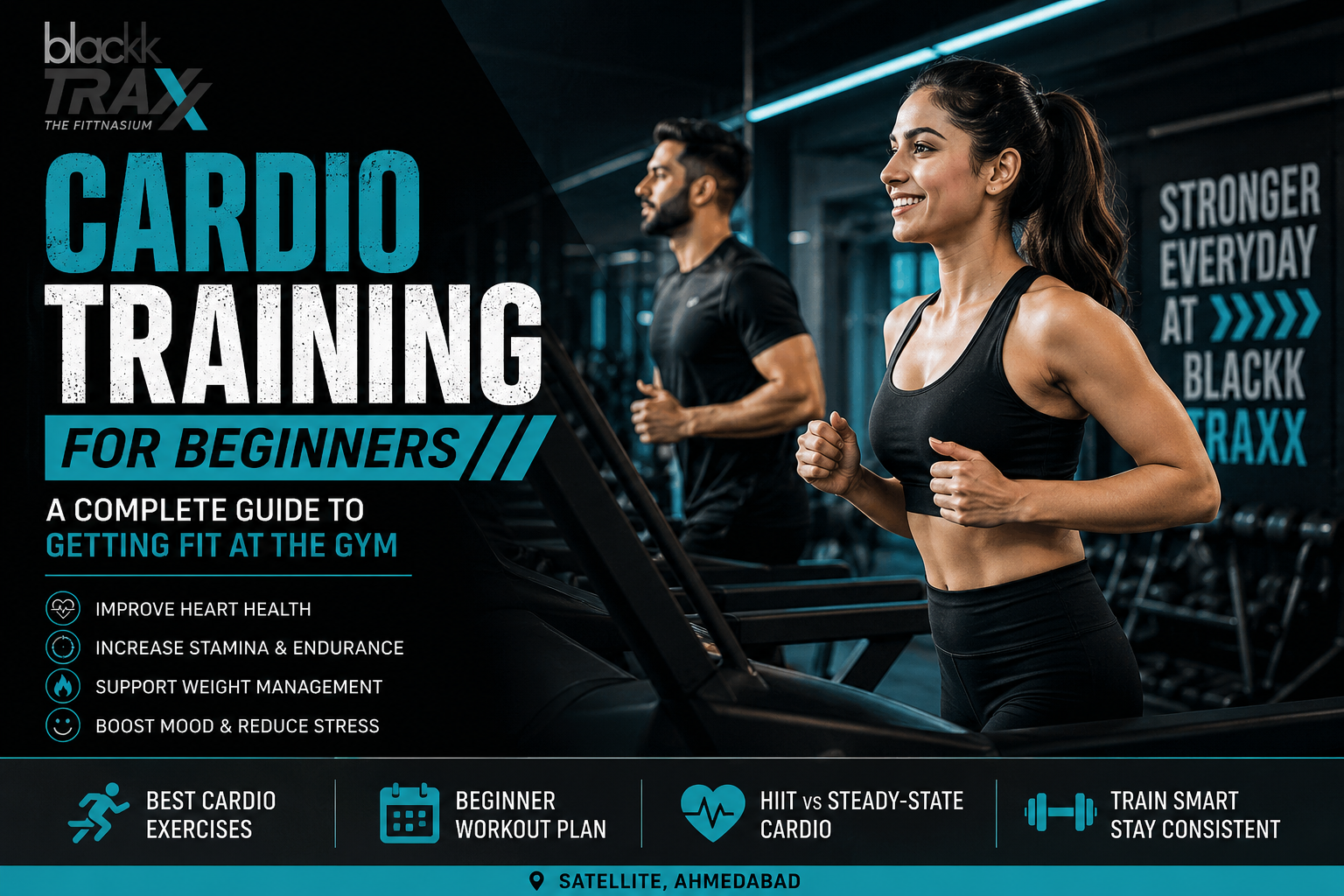
Starting a fitness journey can feel overwhelming, especially when you walk into a gym and see treadmills, cycles, cross trainers, rowing machines, and different types of cardio workouts happening around you.
The good news is that cardio training for beginners does not have to be complicated.
Cardiovascular exercise is an important part of a balanced fitness routine. It can help improve stamina, support heart health, increase physical endurance, and complement goals such as weight management and overall fitness.
Whether you are completely new to exercise, returning to the gym after a long break, or looking for a better workout routine, understanding the basics of cardio training can help you exercise with more confidence and consistency.
In this guide, we will explain what cardio training is, its benefits, the best cardio exercises for beginners, how often you should do cardio, and how to create a simple cardio workout routine at the gym.
What Is Cardio Training?
Cardio training, short for cardiovascular training, is exercise that increases your heart rate and makes your heart, lungs, and muscles work harder.
Common examples of cardio exercises include:
- Walking
- Jogging
- Running
- Cycling
- Treadmill workouts
- Elliptical or cross-trainer workouts
- Rowing
- Stair climbing
- Swimming
- HIIT workouts
The goal is not simply to exercise until you are exhausted. Effective cardio training should match your current fitness level and gradually become more challenging as your stamina improves.
For beginners, starting with manageable workouts and building consistency is generally more useful than immediately attempting high-intensity sessions.
Why Is Cardio Training Important for Beginners?
Cardio can be an excellent foundation for a beginner’s fitness routine.
1. Supports Heart Health
Regular cardiovascular exercise makes your heart work more efficiently during physical activity. Over time, consistent aerobic exercise can contribute to better cardiovascular fitness.
2. Helps Improve Stamina
Do you get tired after climbing stairs or walking for a longer distance?
A consistent cardio routine can help improve your endurance, making everyday physical activities feel easier over time.
3. Supports Weight Management
Cardio exercise uses energy and can contribute to calorie expenditure. When combined with appropriate nutrition and strength training, it can be an effective part of a weight-management program.
However, cardio alone is not a magic solution for fat loss. Your overall activity level, nutrition, sleep, recovery, and training consistency all matter.
4. Can Improve Mood
Exercise can support mental well-being and may help reduce everyday stress. A regular workout can also give you a structured break from work and other daily responsibilities.
5. Helps Build Exercise Consistency
For beginners, one of the biggest challenges is simply creating a sustainable exercise habit.
A 20-minute workout that you can perform consistently is often more valuable than an intense workout that leaves you exhausted and discouraged.
Best Cardio Exercises for Beginners at the Gym
You do not need to use every cardio machine in the gym.
Choose exercises that are comfortable, enjoyable, and appropriate for your current fitness level.
1. Treadmill Walking
Treadmill walking is one of the easiest ways to start cardio training.
Beginners can start with a comfortable walking speed and gradually increase either the duration, speed, or incline as fitness improves.
A simple beginner approach could be:
- 5 minutes of easy walking
- 10 – 15 minutes of comfortable walking
- 5 minutes of slower walking to cool down
2. Stationary Cycling
Cycling provides a low-impact cardio option and can be useful for people who prefer not to walk or run.
Start with a comfortable resistance and focus on maintaining a steady pace.
As your fitness improves, you can gradually increase resistance or introduce short periods of higher intensity.
3. Cross Trainer or Elliptical
The cross trainer provides a cardiovascular workout while reducing the repetitive impact associated with running.
It can be a good option for beginners who want to challenge their cardiovascular system without immediately starting with high-impact exercise.
4. Rowing Machine
Rowing can provide both cardiovascular and muscular involvement.
Because technique matters, beginners should learn the correct rowing movement before increasing resistance or intensity.
If you are new to the machine, ask a qualified trainer to demonstrate the correct technique.
5. Stair Climber
Stair climbing can quickly increase your heart rate and challenge your legs.
Beginners should start slowly and focus on maintaining good posture rather than trying to reach a high speed immediately.
How Much Cardio Should a Beginner Do?
There is no single perfect cardio duration for everyone.
Your ideal starting point depends on your current fitness level, exercise history, goals, schedule, and any physical limitations.
If you are new to exercise, starting with around 20–30 minutes of moderate cardio several times per week can be a practical approach.
As your fitness improves, you can gradually increase the duration or intensity.
The important principle is progressive improvement, not maximum intensity from day one.
If you have been inactive for a long time or have a health condition, it is sensible to speak with an appropriate healthcare professional before starting a demanding exercise program.
How Many Days a Week Should Beginners Do Cardio?
A beginner does not need to perform intense cardio every day.
A simple weekly structure could include:
3 days of cardio + 2–3 days of strength training + recovery days
For example:
| Day | Workout |
| Monday | 20 – 30 minutes cardio |
| Tuesday | Strength training |
| Wednesday | 20 – 30 minutes cardio |
| Thursday | Strength training |
| Friday | Rest or light activity |
| Saturday | 25 – 30 minutes cardio |
| Sunday | Rest |
This is only an example. Your routine should be adjusted according to your goals, fitness level, schedule, and recovery.
Should Beginners Do Cardio Every Day?
Not necessarily.
Your body needs recovery, particularly when you are new to exercise.
Doing cardio every day is not automatically better. Training volume should be increased gradually, and rest or lower-intensity days can help you maintain consistency.
Instead of asking, “How much cardio can I survive?” ask:
“What cardio routine can I consistently follow for the next several months?”
That mindset can make a huge difference.
Cardio Before or After Strength Training?
This depends on your primary fitness goal.
If your main goal is improving cardiovascular endurance, you may prefer to prioritize cardio during your workout.
If your main goal is building strength or muscle, performing strength training first may allow you to give more energy to your resistance exercises.
Another option is to perform cardio and strength training on separate days.
For many beginners, combining both types of training throughout the week can provide a more balanced approach to fitness.
HIIT vs Steady-State Cardio for Beginners
Two common approaches to cardio are HIIT and steady-state cardio.
What Is HIIT?
HIIT stands for High-Intensity Interval Training.
It involves alternating between periods of higher-intensity exercise and recovery.
For example:
- 30 seconds faster effort
- 60 – 90 seconds easier effort
- Repeat several times
HIIT can be demanding, so beginners should not assume that harder always means better.
What Is Steady-State Cardio?
Steady-state cardio involves maintaining a relatively consistent intensity for a longer period.
Examples include:
- Brisk treadmill walking
- Moderate cycling
- Steady elliptical training
- Light jogging
For someone completely new to exercise, steady-state cardio can be an easier way to learn how their body responds to exercise before progressing toward more demanding interval workouts.
A Simple Beginner Cardio Workout at the Gym
If you are wondering how to begin, here is a simple example.
25-Minute Beginner Cardio Workout
Step 1: Warm-up – 5 minutes
Start with slow walking or very light cycling.
Step 2: Main workout – 15 minutes
Choose one:
- Brisk treadmill walking
- Stationary cycling
- Elliptical training
Maintain a pace that feels challenging but manageable.
Step 3: Cool-down – 5 minutes
Gradually reduce your speed and allow your breathing and heart rate to come down.
As your fitness improves, you can gradually increase the duration or introduce short intervals.
Common Cardio Training Mistakes Beginners Should Avoid
1. Starting Too Fast
Trying to copy an advanced athlete’s workout on your first week is a recipe for unnecessary fatigue.
Start at your level.
2. Ignoring the Warm-Up
A few minutes of gradual movement can prepare your body for the workout.
3. Doing Only Cardio
Cardio is valuable, but a balanced fitness program can also include strength training, mobility work, and adequate recovery.
4. Training Hard Every Day
Your body needs time to recover and adapt.
5. Ignoring Proper Technique
Using incorrect posture or machine settings can reduce workout quality and potentially increase injury risk.
If you are unsure how to use a machine, ask a qualified trainer for guidance.
6. Focusing Only on Calories Burned
Fitness progress is about more than the calorie number displayed on a machine.
Look at improvements in stamina, workout duration, strength, consistency, energy, and overall fitness.
How to Make Cardio Workouts More Effective
Once you have established a consistent routine, you can gradually make your workouts more challenging.
Try changing one variable at a time:
- Increase workout duration
- Increase walking speed
- Add a small incline
- Increase cycling resistance
- Add short intervals
- Improve workout consistency
Avoid changing everything at once.
A gradual progression allows you to understand how your body responds to increased training demands.
Can Cardio Help With Weight Loss?
Yes, cardio can be an important component of a weight-management program because physical activity increases energy expenditure.
However, successful and sustainable weight management involves more than cardio.
A well-rounded approach may combine:
- Cardio training
- Strength training
- Balanced nutrition
- Adequate sleep
- Recovery
- Consistent daily activity
If your goal is fat loss, focusing only on spending more time on the treadmill may not be the most effective strategy.
The better question is:
How can cardio, strength training, nutrition, and lifestyle habits work together?
Why Trainer Guidance Can Help Beginners
Walking into a gym for the first time can leave you with plenty of questions:
Which machine should I use?
How fast should I go?
How long should I exercise?
Should I do cardio before weights?
When should I increase the intensity?
A qualified fitness trainer can help you answer these questions and create a workout approach based on your fitness level and goals.
At Blackk Traxx – The Fittnasium, cardio training is part of a broader fitness approach that includes weight management, strength and conditioning, personal training, sports fitness, and recovery-focused programs. The gym describes its cardio training as being focused on improving cardiovascular fitness, stamina, and overall well-being.
For beginners, the advantage of structured guidance is that you can learn the basics, understand appropriate exercise intensity, and gradually progress rather than randomly switching between machines.
Cardio Training at Blackk Traxx in Ahmedabad
If you are looking for cardio training in Ahmedabad, choosing a gym with the right equipment and professional guidance can make your fitness journey easier to manage.
Blackk Traxx – The Fittnasium is located in Satellite, Ahmedabad, and offers fitness programs designed for different experience levels and goals. Its current fitness offering includes cardio, strength and conditioning, personal training, weight management, sports fitness, and recovery programs.
The focus should not simply be on spending more time inside the gym.
The goal is to build a workout routine that fits your body, your goals, and your lifestyle.
Frequently Asked Questions About Cardio Training for Beginners
Is cardio good for beginners?
Yes. Cardio can be an effective way for beginners to improve cardiovascular fitness, stamina, endurance, and overall physical activity. Beginners should start at an appropriate intensity and gradually progress.
How long should a beginner do cardio?
A beginner can start with a manageable session such as 20–30 minutes and gradually increase duration or intensity as fitness improves.
What is the best cardio exercise for beginners?
There is no single best exercise for everyone. Walking, cycling, elliptical training, and other low-to-moderate intensity activities can be good starting options depending on your fitness level and preferences.
Can beginners do HIIT?
Beginners can eventually incorporate interval training, but high-intensity exercise should be introduced progressively. If you are new to exercise, start with manageable cardio and learn proper technique before progressing to harder sessions.
Is cardio enough for weight loss?
Cardio can contribute to weight management, but combining cardiovascular exercise with strength training, appropriate nutrition, recovery, and consistent lifestyle habits can provide a more complete approach.
Should I do cardio before or after weights?
It depends on your primary goal. If cardiovascular performance is your priority, cardio may come first. If strength or muscle development is the priority, strength training may come first. Your weekly training structure can also separate cardio and strength workouts.
Can I do cardio every day?
You can be physically active every day, but that does not mean you need intense cardio every day. Beginners should allow adequate recovery and gradually increase training volume.
Where can I do cardio training in Ahmedabad?
If you are looking for structured cardio training in Ahmedabad, Blackk Traxx – The Fittnasium in Satellite offers cardio training alongside strength, conditioning, personal training, weight management, and other fitness programs.
Start Your Cardio Training Journey
You do not need to become a marathon runner on your first day at the gym.
Start with a manageable workout. Learn the equipment. Build consistency. Improve gradually.
Whether your goal is better stamina, improved cardiovascular fitness, weight management, or simply becoming more active, cardio training for beginners can be a valuable part of your fitness journey.
If you are looking for professional guidance and cardio training in Ahmedabad, Blackk Traxx – The Fittnasium can help you build a structured fitness routine around your individual goals.
Ready to get started? Visit Blackk Traxx – The Fittnasium and begin your fitness journey in Satellite, Ahmedabad.